
*This post may contain affiliate links. As an Amazon Associate we earn from qualifying purchases.
Saltwater is corrosive and damaging, and using your RC boat in this kind of water may not be the smartest choice you’ve ever made. It’s different from when you use it in freshwater, which mostly has no damaging qualities.
In spite of how damaging saltwater can be to your boat, there are quite a number of RC boats that can withstand the corrosiveness of salt water.
Some of the best RC boats that can handle being used in saltwater are:
- TFL 1126 880mm Lucky
- Brushless Warship RC boat
- Sums Q7 RC boat
Before we get into talking about which boats can survive in saltwater, let’s first talk about precautions to take before using your RC boat in saltwater and how to care for the boat after you use it.
To see the most popular RC boats currently available just click here.
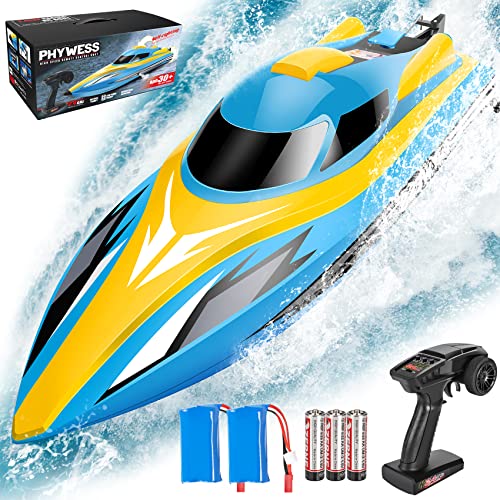
Of all of the RC vehicles that you can purchase RC boats are by far the most reasonably priced. This model can go over 20MPH, comes with the needed batteries, and remote.
All of this is included without breaking the bank!
Proper care for your RC boat before and after use
There are some safety precautions that you need to take before putting your boat into saltwater for the first time.
First of all, make sure that all the screws of the boat are tightened properly. Also make sure that you pay careful attention to the engine mount, the propeller, as well as the rudders of the boat. If you are using a sailboat, make sure that the mast screws are also tight in order to lower the risk of capsizing.
Also, you should use silicone to seal any openings on the radio, and if you cannot do this, use rubber plugs to stop the water from getting into the boat. Keep the receiver inside a plastic bag that has a small hole cut to accommodate the antenna and then use plastic straps to close the bag.
Another issue that RC boats have to deal with in saltwater (or any water really) is capsizing, which is certainly going to happen someday no matter how much of an expert you are. Now, when the boat is in saltwater, capsizing can be very tough on it because it lets saltwater get inside, and this can be very damaging to the electrical components of the boat.
In order to prevent your boat from sinking when it capsizes, you can put empty bottles of soda into the boat’s bow. Just take off the lids from the empty bottles of soda and squeeze them till they are flat so that as many as possible can fit into the bow. As soon as they are inside the bow, fill them up with air to ensure that they are in their original shape, then you can replace the caps. Also, put as many pool noodles as you can in your hull so that it does not sink when it capsizes.
Another option is to simply purchase an RC boat that has the feature of automatically righting itself if it capsized. That option is much easier and is preferred by most people.
If your boat capsizes, the very first thing to do is to remove all the water from the boat as soon as possible. This will mean that you have to empty out the gas tank and the fuel lines as well as cleanout the engine if it’s a fuel powered RC boat. If it’s battery powered then you obviously will want to dry out the electronics as soon as possible.
Speaking of the care needed afterwards, one of the biggest problems that saltwater can pose to your RC boat is the problem of rust or corroding the plastic which can happen just about anywhere the saltwater gets to. The best way to stop this from happening is to clean your boat thoroughly after using it in saltwater every single time.
When cleaning your boat, make use of a neutral base soap and a lot of fresh water. Also, ensure that everything on the boat is dry and all the metallic parts are oiled before you put up the boat.
The cleaner you can keep your RC boat after using it in saltwater the better it will run and the longer it will last.
RC Boats That Can Run in Salt Water
TFL 1126 880mm Lucky
This inner rotor motor with imported silicon steel sheet, magnetic steel, and bearing is one of the best boats you can race in saltwater and trust it to survive. These features make sure that the motor can provide you with up to 90% effective efficiency, which provides the power needed for the warship as well as special energy-saving features as well.
While this is is a very effective boat for saltwater, here are some features it does not come with:
- Servo: S3006. 6KG servo or one 3KG standard servo.
- Transmitter: FS-GT2E, FS-GT2B. Pick a radio control according to your requirements.
- Battery: 14.8V 4400Hah 40C Li-Po battery or 11.1V 3S 30C 4000mAh LiPo package included:1X Rc Boat.
Seeing as this does not come with a servo, transmitter, battery, or charger, you would have to buy those items separately.
You can find this boat online here but be warned it is far from being inexpensive.
Brushless Warship RC Boat
This boat comes with a 7.4V 4500mAh 30C large rate lithium battery as well as a 4G three-channel automatic frequency-to-frequency full-scale synchronous remote control system. Its 1X19G 2.2KG digital steering servo gives you the best steering control and its 30A brushless ESC drive 2212 brushless motor is just what you need for maximum speed.
There’s a low voltage sound included alongside a light alarm system. Whether you want to use it in a pool, lake, or a shallow water area, this boat gives you a great top speed. Its powerful hovercraft is very easy to navigate compared to a regular RC boat, and this is one thrilling thing.
The way the hovercraft is designed, it makes sure that localized damage does not have the whole hovercraft completely leaking. This hovercraft is made of ABS material and is very tough and offers top performance. Most importantly, this is one more RC boat that can survive salty water.
This model can be found here.
SYMA Q7 RC boat
This SYMA RC boat is another excellent option for saltwater. Offering good speed and great performance, it comes with just the precision that you need to have the most fun while you are racing it on the ocean or backwaters. Plus, it is made with durable material to ensure that this boat stays with you for a long time.
This model is by far the cheapest of the three but it is also not as elaborate as the first two. You can learn more about it on Amazon here.
Conclusion
While these boats can actually survive saltwater, always make sure to carry out the safety precautions noted above as well as take the time to properly clean up and care for your boat after every use. This will help to keep your boat in good condition and also keep the salt water from corroding any metal or plastic that is exposed to it.
As with everything, proper care before and after using your RC boat is vitally important so be sure to take the time to clean it, seal it, and you will be able to keep it running properly for a long time to come.