
*This post may contain affiliate links. As an Amazon Associate we earn from qualifying purchases.
Just like the batteries of other RC cars, there are quite a number of possible reasons your Traxxas battery isn’t charging. Seeing as Traxxas RC vehicles use the same kinds of batteries (LiPo or NiMH) as other RC cars, we are going to be talking about possible reasons your RC battery isn’t charging looking at these two types of batteries that you might possibly have.
The most likely reason your Traxxas battery isn’t charging is because it has become over discharged. It could also not be charging because of a faulty charger, bad connections, or a broken circuit.
The first thing that you should check when a specific battery won’t charge is try to charge a different battery with that same charger. If that battery charges then you know the charger isn’t at fault.
Checking the connections/wires is an easy thing to do so unless they are badly bent or have been crushed they likely aren’t the issue either.
Assuming your battery has been over discharged you will need to attempt to revive it. We will talk about that a little bit later in this article or you can check out the video below.
If you want to see the most popular RC cars and accessories currently on the market just click here.
If you need a new Traxxas battery you can find them by clicking here. Otherwise keep reading and we will go into more depth about the reasons why a battery won’t charge and what you can do about it.

If you love RC Trucks then you will love the 2WD or 4WD Traxxas Slash!
With a top speed of over 60 mph, you will love driving this RC vehicle!
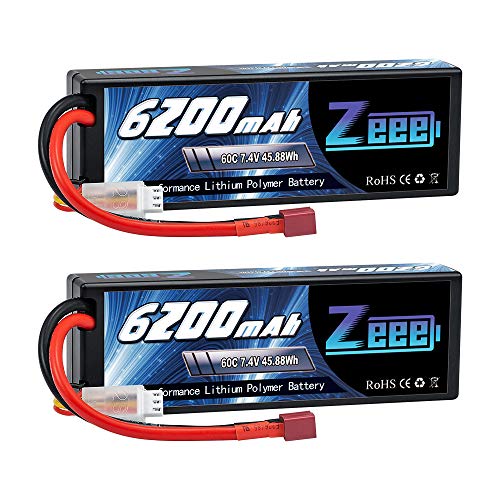
Possible Reasons Your LiPo Battery Isn’t Charging
Here are some possible reasons your LiPo battery is not charging:
A faulty Li-Po charger
While this is not very likely to be the case, it could be a reason that your battery won’t charge. So try your LiPo charger on another battery pack to find out if the charger is the problem.
Battery chargers can be picked up for relatively cheap locally or online so if you don’t have an extra battery you can buy a new one and try it. If that doesn’t fix the issue then simply return the charger.
A broken connection
Another possible reason for your LiPo battery to be rejecting a charge is the possibility of a broken connection somewhere. There could be a broken connection in your charge lead/ wires, the LiPo wires or the battery connector.
You should check any wires, connectors, or plugs with a multimeter or continuity tester.
Check and clean your connectors to ensure there is a good low resistance connection. If you find any frayed wires, it will affect the batteries’ performance so ensure that these wired are repaired, re-soldered, or cut.
Over-discharged battery or cell
Overdischargimg your battery or cell is another possible reason your LiPo isn’t accepting a charge. Over discharging can cause the battery to not recognize when the battery has been connected and give you an error message.
Here are some things that can cause an over-discharging of your cells:
- Regularly running your RC vehicle for very long periods without a voltage cutout set on the ESC.
- Not balance charging the battery pack, which can lead to a higher voltage in one cell.
- A faulty cell mostly caused by overuse or abuse of the battery.
Typically, over-discharging can cause damage to a Li-Po battery or one of its cells. It is best to set your ESC voltage cutout so as to ensure that the battery cannot go lower than 3.0v or 3.3v per cell.
The battery manual or paperwork can provide reliable information on the lowest safe voltage.
When you’re not using your LiPo batteries for more than 2 or 3 days, be sure to store them at the recommended storage voltage.
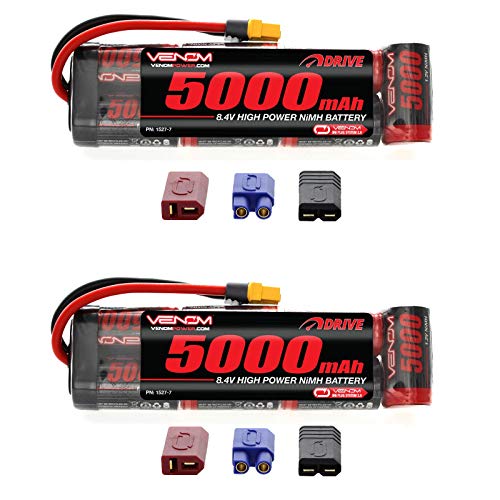
Possible Reasons Your NiMH Battery isn’t charging
Here are some possible reasons your NiMH battery is not charging:
Over-discharging
Just like LiPo batteries, discharging your NiMH batteries too far can make the charger misdetect the number of cells, and this could lead to your battery pack rejecting the charge.
A faulty charger
If your charger is faulty, your battery pack is very likely going to reject the charge. Try using your charger to charge another battery pack to confirm if the fault is from the charger or the battery.
A broken circuit
There, also, could be a broken circuit somewhere preventing your NiMH batteries from charging. Check for any broken circuits to see if this might be the reason your battery isn’t charging.
How to Revive Your Dead LiPo Battery
First of all, you should always avoid discharging your LiPo batteries below 3.0V/cell so as not to cause permanent damage if at all possible. Many chargers won’t even let you charge a LiPo battery that is below 2.5V/cell.
So, if you happen to run your vehicle too long, forget to unplug the battery or leave the power switch on, you may have discharged your LiPo down well below 3.0V/cell. Here’s what to do if and when that happens:
LiPo is under 3.0V/cell
When the battery is under 3.0V/cell, you should charge the LiPo at a substantially reduced rate of 1/20~1/10 C rate (1/20~1/10 [0.05~0.10] x it’s capacity) until it gets higher than 3.0V/cell.
You may have to use a NiMH or NiCad charger setting to recharge a LiPo that is below 3.0V/cell. This is because most smart chargers come with safety features to make sure a user does not charge a LiPo that is below 2.5V/cell because it can be hazardous using a standard charge rate.
Using a NiMH/NiCad setting will help you get a low and constant charge current and charge until the battery has more than a 3.0V/cell charge. Don’t ever leave the NiMH or NiCad charger unattended when you’re charging the LiPos as you don’t want them to get above 3.0V/cell with them.
The reason is that the NiMh/NiCad end-of-charge detection method is not compatible with Lithium-based batteries. If you let it stay on the charger till it gets full, you won’t be able to detect the end-of-charge state, and this will have the battery overcharging till it possibly goes up in flames!
LiPo is 3.0~3.7V/cell
Once it’s above 3.0V/cell, you can increase the charge rate to 1/10~1/5 C rate [0.10~0.2 x its capacity] until the LiPo is ~3.7V/cell or higher. Then, set the charge rate for a 1300mAh 3S LiPo to 0.2A. This is equal to a 0.2/1.3 = 0.154C charge rate.
You can keep the LiPo in a LiPo-safe charge bag and a fireproof container
LiPo is 3.7~4.2V/cell
Once the LiPi is slightly above 3.7V/cell, you can raise the charge rate back to 1/2 C rate [0.50 x it’s capacity] until the LiPo gets full (4.20V/cell). You may now set the charge rate for your LiPo to 0.5A. This is equal to a 0.5/1.3 = 0.385C charge rate.
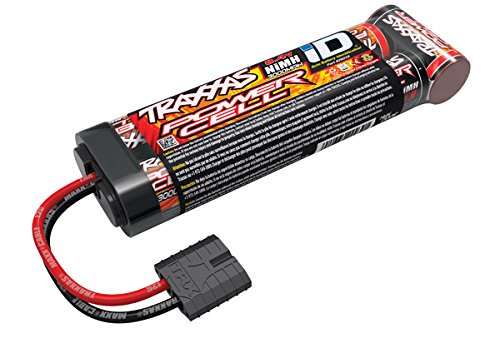
How to Revive Your Dead NiMH Battery
Here’s how to revive your LiPo battery:
Checking the battery
First off, check if there’s any juice left in the battery after charging for some time to know if it’s dead. If it is, then go on to revive the battery.
Reviving the battery
Pick a fully-charged identical battery of the same mAh. Connect the fully charged battery’s positive terminal to the dead battery’s positive terminal. Connect the negative terminals in the same way.
Leave the batteries connected for about 20-30 seconds. Right after that, check the dead battery’s voltage. If you get a reading higher than the 0 value, then the battery has been revived.
If the battery, however, is still dead after you have done these things, repeat the process again and again if the issue keeps recurring. It will probably come back to life after trying a few times. When it gets back to life, charge it until it gets full.
Conclusion
In this article we covered some of the reasons why a Traxxas battery won’t charge and what you can do about it. If after trying all of these steps you still aren’t able to get the battery to accept a charge it might be a better use of your time to just go and get a new battery.
RC batteries can typically be purchased quite inexpensive so spending multiple days working on it normally isn’t worth the time since you can just buy a brand new one pretty cheaply.