*This post may contain affiliate links. As an Amazon Associate we earn from qualifying purchases.
Controlling unwanted birds and animals and keeping them from entering your farming area is a crucial task. Needless to say, having some cool technology to help to do so makes things a lot easier. With the constant advancements in technology and specifically drone technology you can now use drones to chase off geese or other unwanted animals from your property or to protect it better.
Often, chasing away geese is an important thing for farmers, because they tend to destroy crops.
Therefore, nowadays, farmers and other individuals tend to use the help of these small unmanned vehicles to easily tackle the bird problem without having to try and scare them away by themselves.
Drones can easily scare away geese and other birds and animals, keeping the environment, as well as the creatures safe. If you are looking for an alternative method to repel all unwanted creatures and birds away, then using drones will definitely create a visual of a ‘’ strong-flying attacker’’.
Therefore, the drone simply looks like the predator here, but doesn’t actually eat or harm its prey, and only works to protect the crops or property from any kind of damage the animals might have caused. If you have an issue with geese or other animals constantly causing problems then purchasing a drone to chase and scare the geese or other animals away is a good idea.
Ideally when buying a drone to chase geese away you will want one that is inexpensive but also with a long battery life. That way if the drone gets damaged by the geese you aren’t losing a super expensive drone.
Some of the best drones currently available that fit this are:
- Holy Stone HS110D (found here)
- Deerc D10 (found here)
- Deerc D50 (found here)
- Snaptain A10 (found here)
All four of these drones are relatively cheap so if you break it after chasing geese for a few months it won’t be the end of the world. They all also have good battery life and other good features despite being some of the most budget friendly drones on the market today.
If you would like to see how exactly a drone can be used to chase a drone away check out the video below.
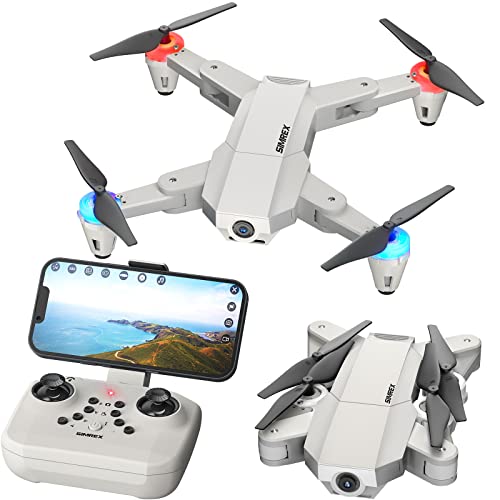
Figuring out how to fly a new drone can be difficult for beginners but not with this model.
I purchased this model for my 7-year-old son and he figured it out easily.
With auto hover, auto trim, and super simple controls you can’t go wrong. And it was pretty cheap too!
What are some factors to consider, when buying a drone to chase geese?
Drones come with a huge amount of different specifications that may seem to be a whole new world for any beginners out there. With a modern outlook and some daring control features, drones that you would use to chase geese will have similar qualities as normal flying drones Do. Designed to impress the user, some of the drones you notice at stores or online, will have an autonomous flying option, where the drone will fly easily, without any commands at all.
However, if you are confused about how to get ahold of the best drones to control geese attacks, then the factors are defined below:
Check for some special sound features available
One of the most important factors for purchasing the right drones for chasing geese is to take note of the specific qualities associated with the instrument. This refers to the maximum size of the drone, the auto-flight option, etc. The appearance of the drone itself resembles that of a predator, which is why it works great to scare the birds away. Hence, the drone should typically have both physical, as well as visual features, to create a horrifying bird repellant. Plus, the drone you buy should be easy to use and eco-friendly as well.
Asses the flying time
When purchasing a drone, always try to analyze the basic flying time of the machine. Sometimes, drones can fly for up to 40 minutes to 1 hour non-stop but typically those drones are very expensive. How long a drone can fly will depend on the capacity of the battery and its motors as well as the weight of the drone.
The drone models that you will come across, vary in nature but the longer the flight time the better when you are chasing geese with them. You will want to compare the flight times of drones with similar prices and other features to have an accurate comparison.
What is the maximum height the drone can fly?
Drones are known to fly thousands of feet above the ground with no problem but certain models won’t be able to reach that height. However if you are in one of the many countries that have height restorations in place you will likely only be able to go 300-400 feet in the air by law anyway.
If you live in a country where there aren’t laws like this then you will want a drone that can handle flying higher in the air to chase the geese further away.
The program controls
The main program control of the drone is also essential especially since you are about to use the drone for patrolling. Ideally you will want to keep an eye on what time of the day geese are the biggest problems and then fly your drone during that time frame.
If you can fly a drone in a specific customized pattern without actually having to fly it yourself then that is a bonus as well. If the drone you are looking at doesn’t have some type of autonomous mode then you will have to manually chase the geese during that time.
GPS inclusion
One of the major perks of getting a high-quality and technological advanced drone is that there is a GPS present on the model. With this feature, individuals can keep track of the activity of the drone, when it is keeping an eye on your farm. Also, for any kind of danger around you, the GPS signal will pass on a hint, which will again create some terrifying sound, to scare away the geese.
Plus, when the drone is not in its auto-flight mode, the GPS option can be used to guide the drone back home. Therefore, this factor will definitely help in one way or the other.
The material construction of the drone
One of the most significant factors that are specifically credited to all kinds of drones is its material construction. Here, the drone should be tough, made of good plastic and with as much improved technological advancement as possible.
Many drones are now specialized, with their exterior made of professionalized carbon fiber or other harder material. This construction is strong, long-lasting and should be able to withstand some bump-ins with any obstacles and you might accidentally hit.
One huge downside to these specialized drones is that they can be quite expensive and normally if you are just using a drone to chase geese you won’t want that expensive of a model.
Where to buy the best drones to scare away geese?
For a typical bird controlling drone, it is essential to first think about the essential qualities that you are looking for in the device. In simple words, drones or mini helicopters are technical gadgets, which are not child’s play and they can be as simple or advanced as you like.
Before you purchase a drone you should have some basic knowledge of how to fly it and what are its perks. Therefore, for instant bird repelling action, the drone should be superior in controls, with some extra features included if at all possible.
Although there is no specific place to buy a drone, there are plenty of options available online such as the ones mentioned earlier in this article. There are of course many places you can buy drones at offline stores as well but you have to be careful not to get sucked into a more expensive drone that you don’t need.
When purchasing the gadget from any store, make sure that you check the warranty of the drone and the store’s return policy too. Good brands have at least a two-year warranty, where any damage can be repaired easily. Also, it is advised for amateur drone flyers, to read the instruction manual first as well as get tons of practice in before you try to chase your first goose.
All major details of flying, the features associated with the drone, controlling techniques, etc. are all elaborately described in the manual or you can easily watch videos on YouTube to learn how to control your new drone as well.